
Ceiling water damage repair in Richardson, TX
A wet ceiling ends up one of three ways, and how long it stayed wet decides which one.
Call For Help(972) 449-592524/7 emergency line. Free estimates from local pros.
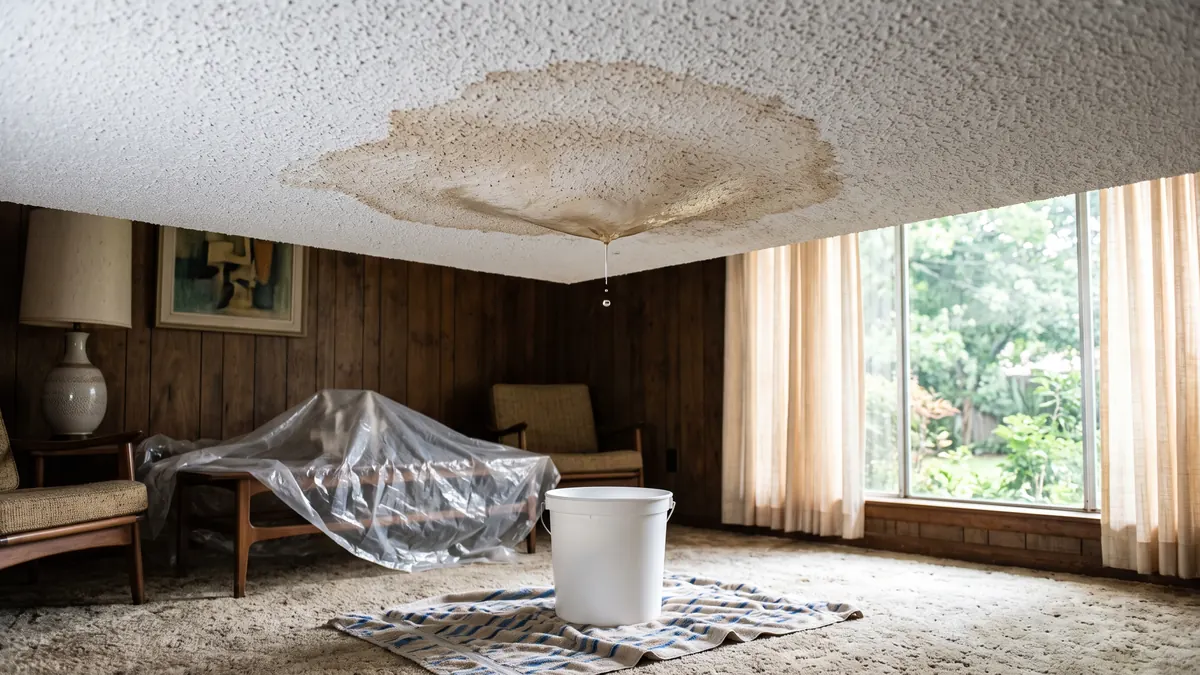
A wet ceiling ends up in one of three places. It dries where it sits, a section gets cut out and patched, or the whole sheet comes down. Which one happens to yours depends on how long it stayed wet, where the water came from, and whether it’s already sagging under its own weight.
Dries in place, no cutting needed
A ceiling that dries in place usually caught the water early. The source got shut off or stopped on its own within a day, the drywall never softened past a light stain, and the texture on the surface still holds its shape. Equipment can run behind the ceiling to finish the drying, and once it’s confirmed dry, a coat of primer and paint usually covers the rest.
A section comes out, the rest stays
Give that same leak another day or two, and the outcome changes. One section of drywall softens while the rest of the sheet still holds together fine. A repair here means cutting out just that soft patch, tying the new piece into the existing texture, and leaving the surrounding ceiling alone. It’s a smaller job than it sounds, because most of the ceiling never needed touching.
The whole sheet comes down
Water that keeps arriving for days, instead of stopping after one event, usually wins this one. A slow roof leak that never got noticed, or a line that kept dripping unchecked, can soak a ceiling past the point where drywall holds its own weight. Sagging is the clearest sign it’s already there. If a spot overhead is bulging or drooping, stay out from underneath it. That section is heavier than it looks once it’s fully soaked, and it can give way with little warning.
What’s actually above the stain
Above most Richardson ceilings sits one of three things: a bathroom or kitchen supply line, an attic AC unit’s condensate line, or the roof deck itself. Which one it is changes who looks at the leak first, a plumber, an HVAC company, or a roofer, but it doesn’t change which of the three outcomes above fits your ceiling. That gets decided by time and sag, not by what caused it. When the source is an AC unit, the guide to AC drain pan overflow models how that particular version starts in the attic and works its way down before it ever shows on the ceiling below. When a storm opened the roof first, the storm damage cleanup page combs through what a wind-damaged roof does to everything under it.
Most people can’t tell which of the three outcomes fits their own ceiling just by looking up at it. A walkthrough settles that: someone gets eyes on the stain, checks how far the water traveled, and tells you which repair path applies before anything gets cut. That look is available any time the stain shows up, whether that’s a Tuesday morning or a Saturday night, and it comes with a drying timeline for however long the rest of the job takes; the day-by-day version sits in the drying time guide.
Time already picked the outcome
Whichever outcome fits your ceiling, the choice got made before anyone showed up to look at it. Water that dried within a day usually stays. Water that sat for most of a week usually doesn’t. The stain on your ceiling right now is really just a record of how long it’s been up there. The repair just catches up to what already happened.
Common questions
A stain on my ceiling hasn't grown in weeks. Is it still worth calling about?
A stain that stopped growing usually means the source stopped too, but that doesn't tell you whether the drywall behind it is actually dry. Water can sit inside a ceiling cavity long after the surface looks settled. A quick look can tell you whether it's finished drying or still holding moisture.
How do I know what's actually above a ceiling stain?
From the floor, you usually can't. A bathroom or kitchen line, an attic AC unit, and the roof deck all sit close together up there, and any one of them can be the source. Whoever comes out traces the stain back before deciding on a repair.
My ceiling has a soft spot that's starting to bulge. What should I do until someone gets there?
Stay out from directly underneath it, and clear the area below of anything you don't want damaged. Saturated drywall weighs more than it looks like it does, and a bulging spot can let go before it seems ready to. Someone getting eyes on it is the next real step, not a fix over the phone.
Can a ceiling that's already sagging still be saved, or does it always come down?
Sagging usually means that section has already lost its strength, so that part typically comes out rather than drying in place. How much of the ceiling that covers depends on how far the water traveled before anyone caught it.
Related pages
Water Heater Leak
A water heater tank holds a set amount of water, and that number is already fixed before it ever fails.
Learn more →Burst pipe cleanup
Which line let go changes the cleanup more than how big the puddle looks.
Learn more →Commercial Damage
An office suite, a retail strip, and a light industrial space each flood differently, and each needs a different first move.
Learn more →Emergency Removal
Emergency water removal in a Richardson house starts with a walkthrough, not a guess about what's wet.
Learn more →Talk to a local pro now
We answer 24/7. One call gets a Richardson crew moving on your water damage, with a free estimate and help with your insurance claim.
Call For Help(972) 449-5925Free estimates. No obligation to hire.